 By Andrew Faught
For educational neuroscience pioneer James R. Booth, understanding how the brain works comes with a unique challenge: keeping his test subjects from squirming in the cramped confines of a functional magnetic resonance imaging machine.
After overseeing more than 1,000 fMRIs, Booth says the fidgeting is all in a day鈥檚 work, and the insights he is generating far outweigh the challenges of working with his participants鈥� youthful energy.
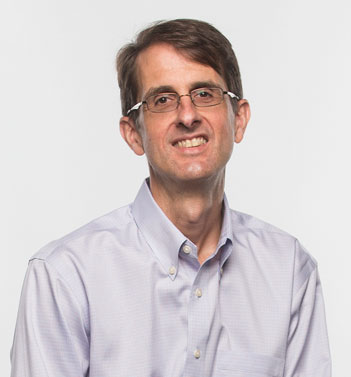
鈥淚n our work, we are using behavioral and early imaging measures to predict trajectories of language and reading development,鈥� says . 鈥淲e want to identify early on who鈥檚 likely to struggle with learning how to read, and use that information to intervene early.鈥�
Although most children are on their way to reading by the first grade, those with language-based learning disabilities such as dyslexia face a significant struggle to decode the written word. Approximately 6 percent of children in the United States have reading disabilities.听
鈥淟earning disabilities are generally diagnosed around second or third grade,鈥� Booth says. 鈥淣euroimaging research may provide an important source of information for predicting dyslexia before children even learn to read.鈥�
The powerful technology in fMRI, which has propelled educational neuroscience to the forefront of scientific inquiry over the past decade, measures brain activity by looking at the amount of oxygen in blood. In Booth鈥檚 Brain Development Lab, he and his team work with children who are about 5 years old. On a small video screen inside the scanner, participants take part in activities as the team observes which regions of the brain are activated. For example, a child may hear words through headphones or view words on a screen and determine if the words are semantically related to one another. Macarena Su谩rez-Pellicioni is conducting postdoctoral research with Booth.
鈥淥ne of the defining characteristics about Dr. Booth鈥檚 research is that it is theoretically motivated with specific predictions about region of interest in the brain,鈥� Su谩rez-Pellicioni says. 鈥淭his means that instead of looking at the whole brain to find areas that 鈥榣ight up鈥� during various tasks, he first identifies brain areas involved in the process of interest by using localizer tasks.鈥�
This approach, she adds, is 鈥渁 more precise way to attribute function to specific parts of the brain.鈥�
An area of the brain that is of particular interest is the middle temporal gyrus, which is typically specialized for vocabulary. An adjacent region, the superior temporal gyrus, typically specializes in phonology (the way words sound). Booth has found that these regions are specialized even in kindergarten. He is now testing whether a lack of early specialization for language is related to later problems with reading.
His research in language and reading has led him to a related line of inquiry in mathematics鈥攕pecifically to examine the mechanisms of the brain that are shared between reading and math. In the laboratory, that has involved fMRI scans in which participants do arithmetic problems, including localizer tasks鈥攁ctivities designed to pinpoint areas of the brain involved in specific verbal and spatial processes.
鈥淢any aspects of math that rely on, say,听multiplication tables, require a verbal mechanism,鈥� he says. 鈥淪o language is absolutely crucial to many aspects of mathematical processing.鈥�
Booth is currently researching the root causes of dyscalculia, a lesser-known and lesser-understood disorder in which affected people struggle with number-related concepts, and at using symbols and functions needed to succeed in mathematics.
Booth is also interested in studying children with attention deficit hyperactivity disorder because many children with ADHD also have learning disabilities. His research using brain scans has been highly effective鈥攁bout 95 percent accurate鈥攊n identifying ADHD in children.
鈥淚n my work I try to look for similarities and differences across the domains,鈥� he says. 鈥淢any labs just look at reading or math. But for me, it鈥檚 really important to think about how they鈥檙e similar or different. It鈥檚 also important to understand how the typically developing child鈥檚 brain functions so that we can see how these processes are affected in those with learning disorders.鈥�
鈥淚t鈥檚 important to understand how the typically developing child鈥檚 brain functions so that we can see how these processes are affected in those with learning disorders.鈥�
鈥擩ames R. Booth
Booth has several fMRI studies in progress. One examines language development in children who are deaf or hard of hearing. More than 2 million children in America have hearing loss in one or both ears, and are at a higher risk of having reading difficulties.
鈥淚magine having to read Latin, without being able to hear how the words are pronounced鈥攖hat鈥檚 kind of what deaf children need to do,鈥� Booth says. 鈥淣euroimaging research can help us understand this, and suggest ways to approach reading education for children who are deaf or hard of hearing.鈥�
Booth and his team also are examining how the brain learns a second language. A four-year grant from the National Science Foundation funds the project, which will evaluate brain function in native English speakers and native Hebrew speakers as they learn new words in a novel language of Booth鈥檚 design.
鈥淗alf of the world is functionally bilingual, yet high levels of proficiency of foreign languages are lacking,鈥� Booth says. 鈥淭he study鈥檚 results will inform methods for improving second language learning.鈥�
Booth came to Peabody in 2017 because of its groundbreaking research in educational neuroscience. He previously spent 16 years at Northwestern University, and three at the University of Texas at Austin, where he was chair of the Moody College of Communication鈥檚 Department of Communication Sciences and Disorders.
鈥淚t鈥檚 all about having great people who do work that is related to the kind of work that I do, and the facilities are state-of-the-art,鈥� he says. 鈥淚t has been fantastic.鈥�
Booth adds that it鈥檚 unlikely he鈥檒l run out of research questions to answer any time soon.
鈥淭he human brain is estimated to have more than 100 billion neurons鈥攁bout the number of stars that are in the Milky Way galaxy,鈥� he says. 鈥淭he possibilities are infinite.鈥�听