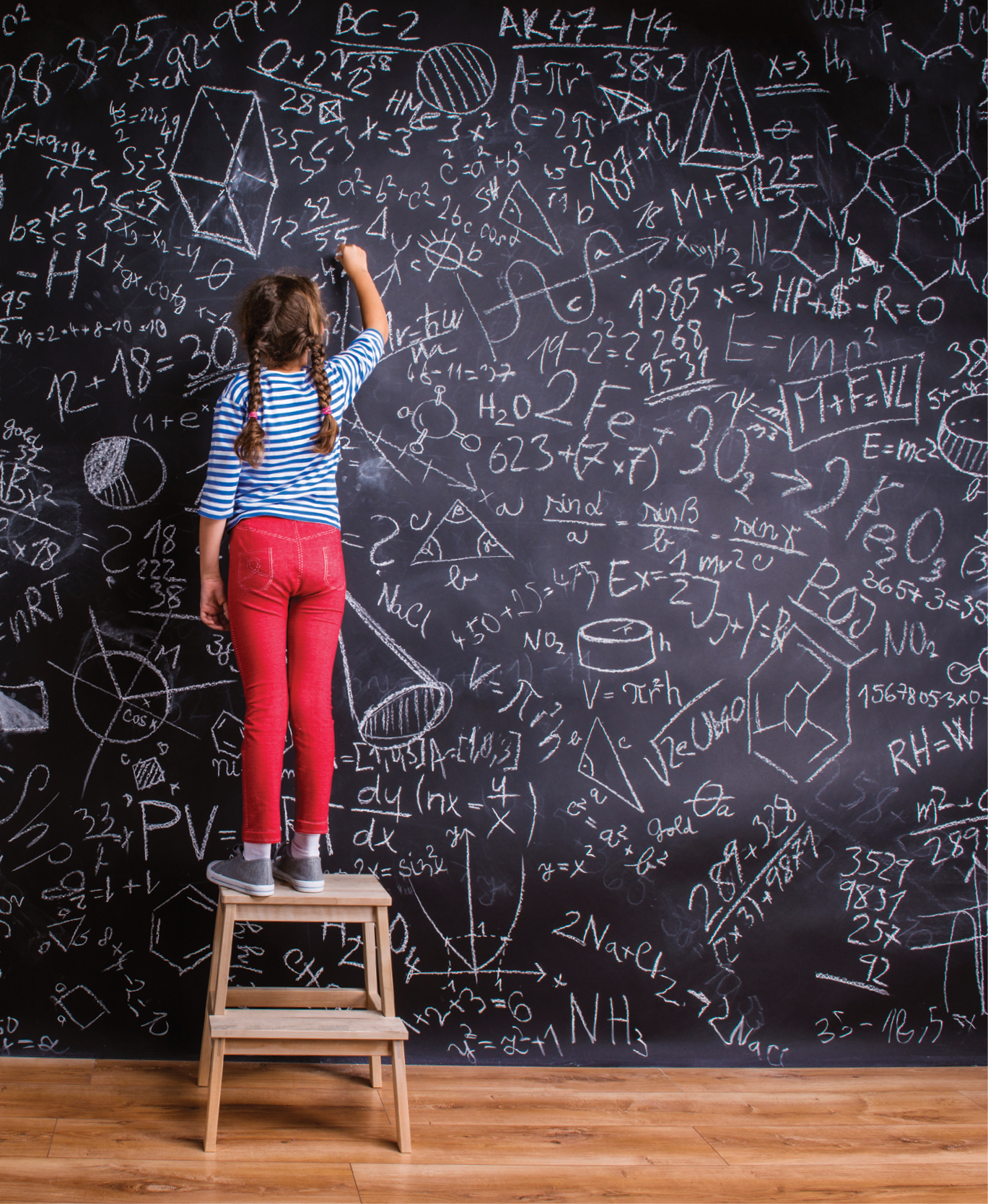
In 1992, Mattel released a talking Barbie doll that among other statements told young girls, 鈥淢ath class is tough.鈥� There was a public outcry and the affronted purchasers were given the option to swap the doll for one sans the offending message. But the assumption that math is a mysterious and uniquely difficult subject that is accessible to some but not all learners lives on.
Math anxiety presents in early grades, often perpetuated by well-meaning parents and teachers harboring their own misconceptions about the subject. Math pedagogy is grounded in memorizing formulas, reciting times tables and making calculations based on a stringent set of rules. Young learners are quick to decide if they are good or bad at math, and are likely to retain that mathematical identity for the rest of their lives.
At Peabody, researchers are bringing a fresh perspective to the traditional understanding of math education. Through their work, they are finding that there are many ways math is learned and are developing innovative new ways to teach it. They believe that math is not an unyielding discipline, accessible to only a select few. And, they would argue, math is fun. Read on, as they deconstruct and dismantle some age-old myths about math.
MYTH: Not everyone is capable of learning math.
鈥淢any people believe math is innate,鈥� says , assistant professor of mathematics education. 鈥淭hey believe math is reserved for an elite group of students, and either you can do it or you can鈥檛. People will say they are not a 鈥榤ath person,鈥� when they would never talk that way about not being able to read.鈥�
Joseph spent 12 years in Seattle as a math teacher and an instructional coach to teachers. She says the myth that not everyone can learn math reflects society鈥檚 tendency to value learners who appear naturally adept at memorizing formulas and calculating quickly and accurately to the exclusion of others.
鈥淓very student is capable of doing mathematics,鈥� Joseph says. 鈥淏ut not every student learns the same way, and teachers have to put aside any preconceived notions and figure out how each student learns best.鈥�
Fourth-grade teacher Julia Crownover has always been enthusiastic about math.
鈥淢ath is truly for everyone. Teachers just need to find creative ways to reach students,鈥� she says. She uses traditional tools like worksheets and flash cards, but she also reaches out to students in ways that speak to them.
鈥淪ome students need a visual or tactile representation, some may thrive with the competition and challenge of a game, and some may benefit with putting math into real-life situations,鈥� she says.
A Nashville native and avid 菠萝视频 basketball fan, Crownover often uses sports to teach math concepts.
鈥淚 know a lot about the 菠萝视频 players and the team,鈥� she says. 鈥淲hen studying the concept of 鈥榤ean,鈥� I will use a player鈥檚 shot record to teach students how to calculate a player鈥檚 average percentage points in a game.
鈥淥ften I see students who are overwhelmed by math or think it is too hard. But when a teacher really engages them and sparks their interest, every student can excel in math.鈥�
Rogers Hall鈥檚 research confirms the effectiveness of using real-life scenarios.
鈥淪ince children learn almost continuously, there are many opportunities for getting interested in, learning and making things that involve mathematics,鈥� says Hall, professor and chair of the Department of Teaching and Learning. 鈥淔or example, if a student maintains her own bicycle, that might be an opportunity to talk about rational number concepts such as ratio and proportion.
鈥淥ther students may engage in crafts like knitting or weaving, which draw heavily on mathematics. Increasingly, teachers鈥� knowledge of how to teach math includes an understanding of how to use out-of-school experiences to support classroom teaching and learning.鈥�
MYTH: Math is only about memorization.
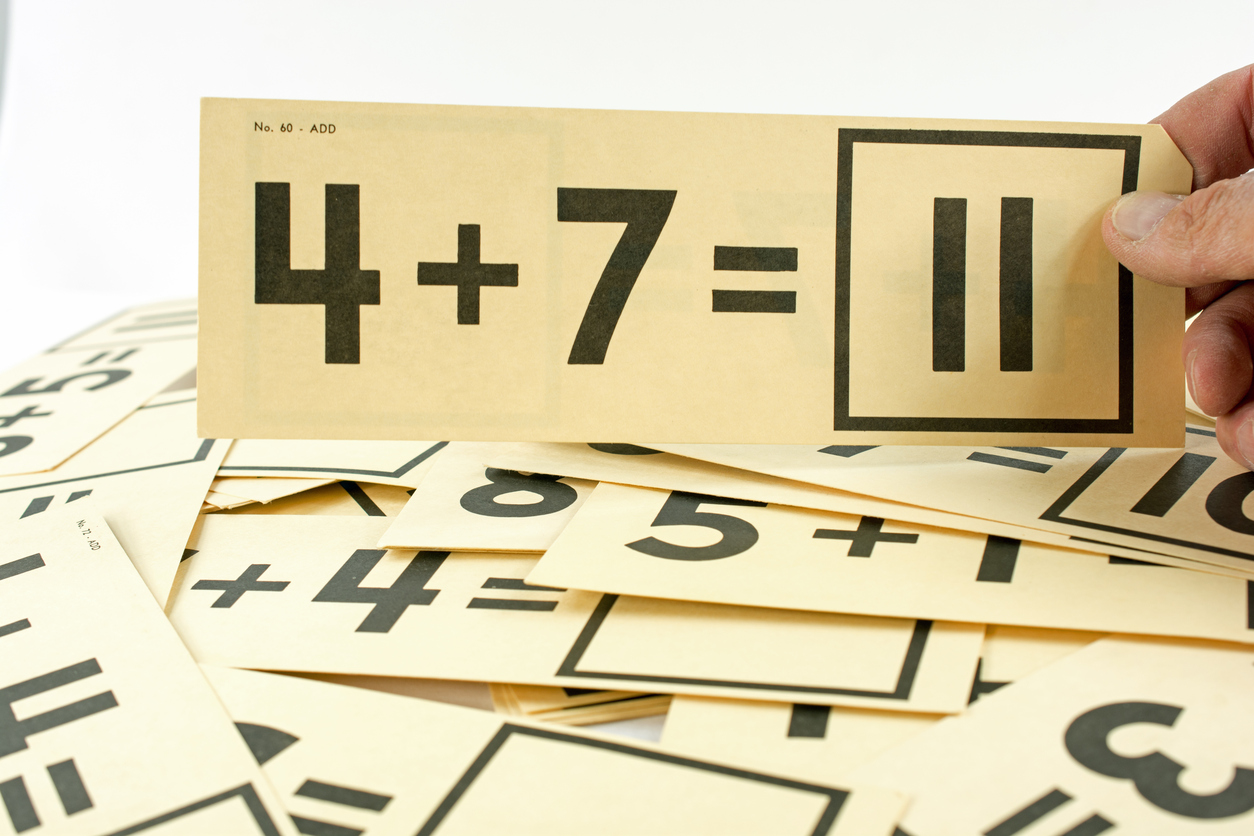
For generations, teachers and parents have taught math in the same way they learned it, through memorization鈥攆acilitated by an abundance of flash cards and worksheets. Certainly, memorization is one component of math learning. But it鈥檚 not the whole story, says , professor of psychology and human development.
鈥淲hen students learn math primarily through memorization, they miss out on developing critical thinking skills that are vital to being successful in math later on,鈥� she says. 鈥淪tudents need to have the ability to memorize a formula, but they also need the understanding of the concept behind it.鈥�
For example, Rittle-Johnson explains that many students fail to understand the function of a very common symbol, the equals sign.
鈥淢any textbooks don鈥檛 clearly define what the equals sign actually means,鈥� she says. 鈥淏ecause of that, students adopt shortcuts such as adding all of the numbers together as soon as they see the symbol, rather than understanding what it really means, which is to have the same value at either side of the equation. It鈥檚 important to understand that before you move on to more complex math concepts.鈥�
Rittle-Johnson is developing and testing an innovative toolkit for algebra teachers in a Massachusetts school district. Comparison and Explanation of Multiple Strategies gives students more than one strategy for solving a problem. Having more solving options helps students decide which one works best for them and to better understand how and why the strategies work.
鈥淲hen students are stuck with only one way of solving, they are only memorizing and not developing critical thinking skills,鈥� Rittle-Johnson said. 鈥淲e are finding that students are having improved outcomes in fraction learning as a result of this new approach.鈥�
MYTH: Math isn鈥檛 supposed to be fun.
Math isn鈥檛 always thought of as fun. But disagrees. She is studying how children can learn math through play, or more specifically a mobile app she designed and tested. Fazio says the first signs of frustration over math often appear when fractions are introduced in the lower grades.
鈥淜ids develop this really strong understanding of whole numbers, and then we teach them fractions, and it blows up everything they have learned about how numbers behave, 鈥� says Fazio, professor of psychology and human development.
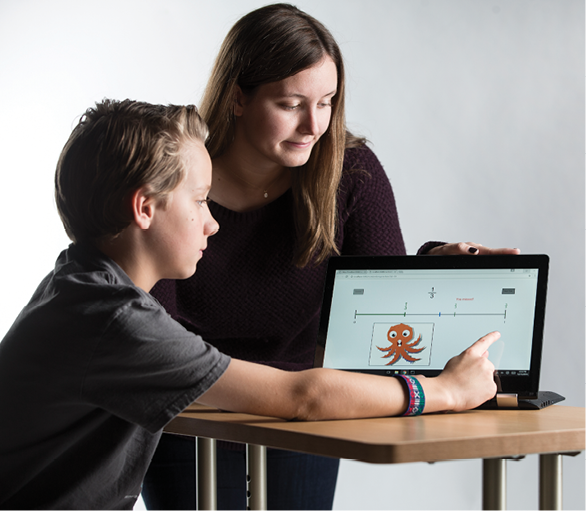
She has spent the last several years developing and testing a computer game for fourth- and fifth-graders called 鈥淐atch the Monster With Fractions.鈥� In the game, players are given prompts to find a particular fraction on a number line. When they click in the correct location, a cartoon monster pops up, along with text that says, 鈥淵ou got me!鈥� If they guess wrong, the monster pops up and says, 鈥淵ou missed!鈥�
Fazio鈥檚 findings show that the students who played the game significantly improved their understanding of fractions compared to those who didn鈥檛.
鈥淭hey said they didn鈥檛 want to stop playing it because it didn鈥檛 feel like homework,鈥� she says. 鈥淚t was just fun.鈥�
, associate professor of mathematics education, and professor of teaching and learning, are also strong proponents of learning math through play. Last fall they earned a National Science Foundation grant to study a math-themed playground at the Minnesota State Fair called 鈥淢ath On-A-Stick.鈥�
Children were invited to engage in a variety of math-based activities and games, including folding paper hexaflexagons, creating symmetry and patterns with stones, tiles and blocks; and connecting tessellating tiles shaped like lizards and turtles. Participants wore Go-Pro video helmets so the researchers could see how they interacted with the games and for how long. Ultimately, the researchers will turn the data into play-based curricula math teachers can use in the classroom.
鈥淓very day doesn鈥檛 have to be a playground,鈥� Horn says, 鈥渂ut throughout the school year, kids do need spaces to have positive experiences while learning mathematical problem-solving. Kids have libraries to fall in love with literature,鈥� she says. 鈥淲here do they have to fall in love with math?鈥�
MYTH: Math is something you do alone.
鈥淎 big myth in mathematics is that it is an individual experience, not a social one,鈥� says assistant professor of mathematics education. 鈥淚n reality, building a social experience surrounding math can help propel students to learn and succeed in ways they wouldn鈥檛 on their own.鈥�
Leyva has studied math experiences of underrepresented undergraduate students pursuing STEM majors and careers. He has found that math comprehension and a sense of belongingness in STEM improved greatly when they worked on assignments in groups rather than alone. Their learning was enhanced by the strong bonds they developed with the other students and teachers.
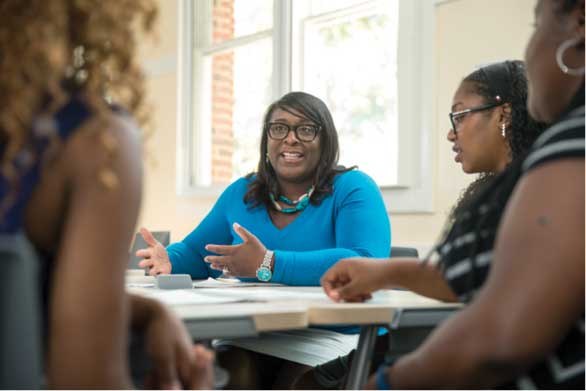
鈥淎dding a social aspect to math is valuable because it validates the gendered and cultural identities each student brings to the class and allows teachers and classmates to engage with math while honoring and learning from each other鈥檚 differences,鈥� Leyva says. 鈥淚 would argue that to support students in math, particularly in marginalized communities, we need to not just think about the academic component, but the social component required to be successful.鈥�
Nicole Joseph鈥檚 research supports the idea that students can benefit from learning math in a more social setting. Her research finds that black middle school girls prefer to collaborate on problems and work in groups and have better outcomes as a result. 鈥淚f their process, or 鈥榳ay of knowing鈥� is not valued in the classroom, they feel that somehow the problem lies with them, not the teaching,鈥� she says.
Joseph says that her math trajectory was built on collaboration. 鈥淚 worked hard and I wanted to keep making those good grades in college, so I reached out to fellow students,鈥� she said. 鈥淚 went up to other students I didn鈥檛 know鈥攎ostly white students鈥攁nd asked to study together. It was fun, and we all did better as a result.鈥�
MYTH: Preschoolers are too young to learn math.

Preschoolers are taught counting and recognizing numbers but often are thought to be too young to be exposed to more complex mathematical concepts.
Rittle-Johnson has conducted much research on the effects of introducing mathematical concepts to 3- and 4-year-olds. She has found that they are capable of engaging in pattern abstraction鈥攊dentifying a pattern of colors or shapes and replicating that pattern with different colors or shapes. When they engage in patterning activities, their brains begin to build a foundation for later mathematical proficiency, she says.
鈥淧attern abstraction teaches the child to look for regularity, repetition and rules, which are critical components of mathematical reasoning,鈥� Rittle-Johnson explains. 鈥淎s they progress to more complicated patterning activities, their mathematical foundation continues to grow.鈥�
She explains that early exposure to math concepts is not only positive, it鈥檚 necessary for a child鈥檚 later mathematical understanding.
鈥淣umbers are important to learn in preschool, but that鈥檚 not where their math learning should end,鈥� Rittle-Johnson said.
Encouraging problem-solving using math scenarios, such as how to distribute blocks evenly among classmates, is another way for preschoolers to begin understanding math concepts they鈥檒l use later on.
鈥淵oung children are tremendously interested in learning about the world around them, and that world includes things that can be counted鈥攂ut also shapes, patterns, and things that are measured,鈥� says , Antonio M. and Anita S. Gotto Professor of Teaching and Learning. 鈥淚t turns out that the broader a child鈥檚 math knowledge is, the more school success he or she has in the future. Early math skills are related to higher achievement not just in math but in literacy as well through at least the fifth grade.鈥�
Farran is part of a consortium of researchers awarded a $5 million grant by the Heising-Simons Foundation to identify more effective teaching practices and promote math learning during the preschool years. One of her areas of study is an examination of the correlation between early mathematical learning and preschool executive function鈥攖he ability to pay attention, control impulses and manage behavior.
When preschoolers engage in early math learning, executive function skills tend to coexist, although researchers don鈥檛 yet know why.
鈥淲e are designing and testing a variety of mathematical activities to help understand this phenomenon,鈥� Farran said. 鈥淚t will be exciting to see how math competencies and executive function intersect and can be enhanced through high-quality early childhood education.鈥�
MYTH: Math is for boys.
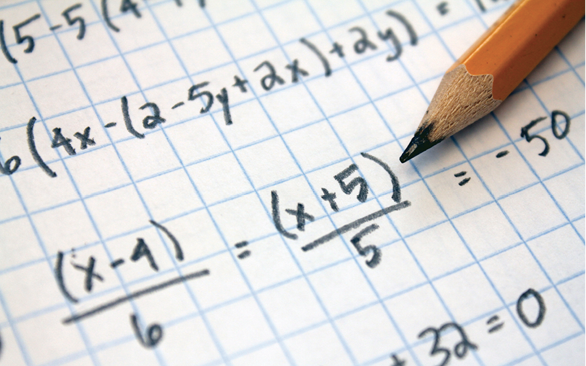
Math has a reputation for being a male endeavor. According to a Stanford University study, boys have outperformed girls in math on the SAT for the past 40 years. On the other hand, the study goes on to say that girls are more likely to graduate at the top of their high-school class, go on to college and earn post-graduate degrees. Are these kinds of comparisons useful?
Not necessarily, according to Luis Leyva. The trouble with comparing outcomes based on sex is that it doesn鈥檛 paint a representative portrait of the gendered variation of mathematics achievement and participation within compared groups of individuals, he says. Much of how individuals behave, what they believe about themselves, and how they respond to math and the world around them is colored by the social construct of gender, not anatomy, he says.
In a forthcoming article in the Journal for 菠萝视频 in Mathematics Education, Leyva discusses how the 鈥渕yth of male superiority鈥� in mathematics assessments has motivated researchers to take a closer look at differential mathematics outcomes and experiences in relation to gender and its intersections with other social identities.
鈥淎chievement is shaped by external influences, including social contexts and individual experiences,鈥� Leyva says. 鈥淢uch of the work on gender in mathematics education doesn鈥檛 address issues of intersectionality鈥攈ow other dimensions of social identity like race or ethnicity, class and sexuality intersect with gender to shape varying forms of experience. If it did, that would allow for more nuanced understandings of mathematics achievement and participation.鈥�
As math students progress to high school, college and careers in STEM, fewer and fewer females and students of color are present. , a former engineer, has experienced this firsthand. 鈥淚 was often one of the only black individuals in my workplace and one of only a few women,鈥� she says. 鈥淥ften we were treated like we were less capable than our peers. I hope that one day that myth will fade out, as people begin to see diversity as an asset, not a liability.鈥�
McGee, assistant professor of education, diversity and STEM education, serves as a mentor to students in underrepresented groups who are pursuing careers in STEM. She believes the common narrative about math careers is too limited.
鈥淢ath is often positioned as a means to make America the next superpower, but that message doesn鈥檛 resonate with students鈥攚omen and other groups鈥攚ho are good at math but also want to provide stability for their communities and their families,鈥� McGee says. 鈥淭here is so much more that math can do. Math knowledge can play a strong role in social justice, in terms of providing ways to understand structural inequities in our society. We need to change the way that math is marketed so that math careers will appeal to a broader range of students.鈥�