 Black and Hispanic students make up an increasing percentage of U.S. school children. Yet in virtually every school district, they are underrepresented in gifted classes and programs, often because they are not identified as gifted. Those who do enter such programs often fail to complete them.
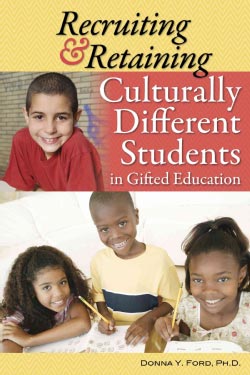
In Recruiting and Retaining Culturally Different Students in Gifted Education (Prufrock Press, 2013), Professor Donna Ford suggests becoming culturally responsive is the key to attracting and keeping gifted Black and Hispanic students.
鈥淎 significant (and increasing) portion of our nation鈥檚 culturally different students is under identified and, accordingly, miseducated,鈥� says Ford, Harvie Branscomb Distinguished Professor at 菠萝视频 University鈥檚 Peabody College of education and human development. 鈥淚t is little wonder that we鈥檝e lost our competitive edge locally, regionally, nationally, and internationally. Educators must be culturally responsive in their beliefs and practice. They must be proactive and assertive at recognizing, understanding, and addressing students鈥� cultural needs, strengths, and development.鈥�
Ford addresses definitions, models, and theories of culture, as well as educational data, language considerations, and cultural strategies for black and for Hispanic students. As part of her exploration of culture鈥檚 effects on students, she examines the influence of different aspects of each culture on its members. She also outlines educational barriers for each group such as lack of teacher referral for gifted programs and test bias. Chapters conclude with sets of questions and reflections designed to guide study and help educators assess their own ideas about what defines giftedness.
鈥淕iftedness is multifaceted and culture dependent鈥攖o ignore culture is to ignore black and Hispanic students,鈥� she says. 鈥淐ulture influences communications styles, learning styles, thinking styles, test-taking styles. Although schools require a high degree of mainstream socialization from non-white students, they seldom provide the environment and supports necessary for black and Hispanic students to gain mainstream skills while remaining connected to their homes and community environments. This culturally insensitive practice hinders both recruitment and retention.鈥�
Ford posits that U.S. schools, professional educators, and laypersons alike emphasize the intellectual and academic aspects of giftedness and points out that intelligence tests are often the gatekeepers for gifted programs. Because a disproportionate percentage of black and Hispanic students live in poverty and have fewer educational opportunities than middle- and high-income students, they are especially vulnerable to low or poor scores on traditional tests. As a means of reducing bias, Ford advocates gathering a variety of information from many sources to create a comprehensive profile of a student rather than relying simply on testing. Yet few states require nondiscriminatory assessment in gifted education.
Recruitment and retention components of the multicultural gifted education framework that Ford proposes include:
- culturally competent educators
- culturally responsive assessment
- multicultural and culturally responsive curriculum and instruction
- a culturally responsive learning environment
- a culturally responsive philosophy
鈥淎ll students, regardless of race, benefit from multiethnic and multicultural education,鈥� Ford says. 鈥淐ulturally responsive gifted education classes promote mutual respect and understanding, comradeship, collegiality, rigor, and social and cultural awareness. Ultimately, a multicultural curriculum fosters a sense of collective interest in the well-being of our nation.鈥�